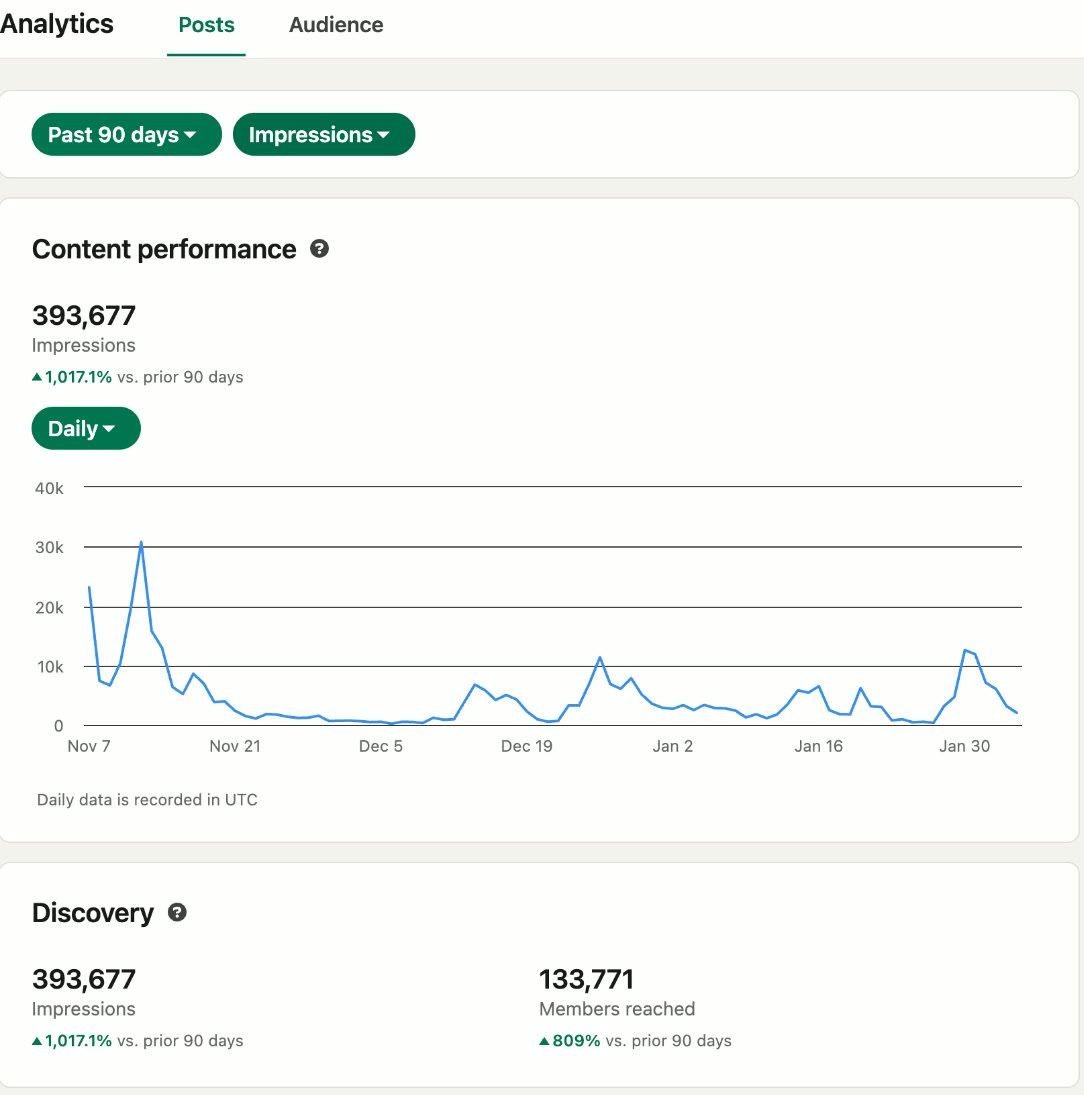
+1,017%
Impressions in 90 days.
Measured against the 90 days before. Not a dollar spent on ads. The same expertise David always had, turned into posts every week.
Impressions per 90 days
about 21,800
393,677
Unique members reached
about 7,400
133,771
Qualified calls a month
3–4
12–16
LinkedIn followers
about 3,900
5,100+
Posting
2–3 times a month, no strategy
3 a week, Tuesday to Thursday
Where deal flow comes from
100% referrals
About 50% from LinkedIn
The client
David Pudwill is President of FDA Blueprint. He guides medical device companies through FDA, from 510(k) submissions and De Novo classifications to pre-submission meetings. His clients range from early-stage startups to enterprise manufacturers, with typical engagements of $5,000 to $25,000 and some above $100,000.
The challenge
Like most specialists, David had built his practice almost entirely on referrals. He posted on LinkedIn two or three times a month, with no strategy behind it. The expertise was deep and worth sharing. What was missing was a system to turn it into steady visibility and inbound demand.
What we did.
-
A monthly interview
Roughly an hour of David’s time each month became the source of every post: real client stories, regulatory insight, hard-won lessons. Never recycled industry news.
-
Three posts a week, not five
We started at five a week, then cut to three, Tuesday to Thursday. Fewer, stronger posts drove noticeably more engagement.
-
Conversations over likes
David put his time into thoughtful comment replies and direct messages, not mindless liking. Selective engagement signalled quality to his audience and to the algorithm.
-
Visuals that break the pattern
Deliberately distinctive images, like a Lego brick with a missing stud, drew waves of comments. Slightly imperfect beat polished stock imagery.
“I don’t have to win them over. I just have to not lose the sale.”
What changed beyond the numbers.
Sales calls
Prospects arrive having read his posts and already trusting his judgment. Calls shifted from convincing to confirming. David puts about half of his deal flow down to LinkedIn, possibly 60–65% as larger engagements land: direct inbound, law firm engagements, and referrals from other consultants who follow his posts.
Conferences
People now stop David in the hallways at industry events because they know him from LinkedIn. At one conference, an attendee grabbed him mid-walk to talk through a regulatory problem.
Competitors
Competing firms now bring David in to help with their own clients’ regulatory problems. When one competing consultant heard a company was working with him, the reply was: “Oh, you’re working with David? David is amazing.”
His time
About five hours a week, mostly replying to comments and following up on inbound interest. Everything else is handled for him.
Who follows him
Followers grew from about 3,900 to 5,100+, and 35% of them are senior decision-makers in his exact target industry. The number that matters is who, not how many.
A regulated field
FDA regulation is as strict as FINRA or SEC rules. Systematic, authentic content still worked, because every post came from David’s real experience rather than marketing claims.
The three posts that led those 90 days.
“A founder sent me his FDA submission last week asking for a review. I told him NO.”
50,787impressions · 37 comments
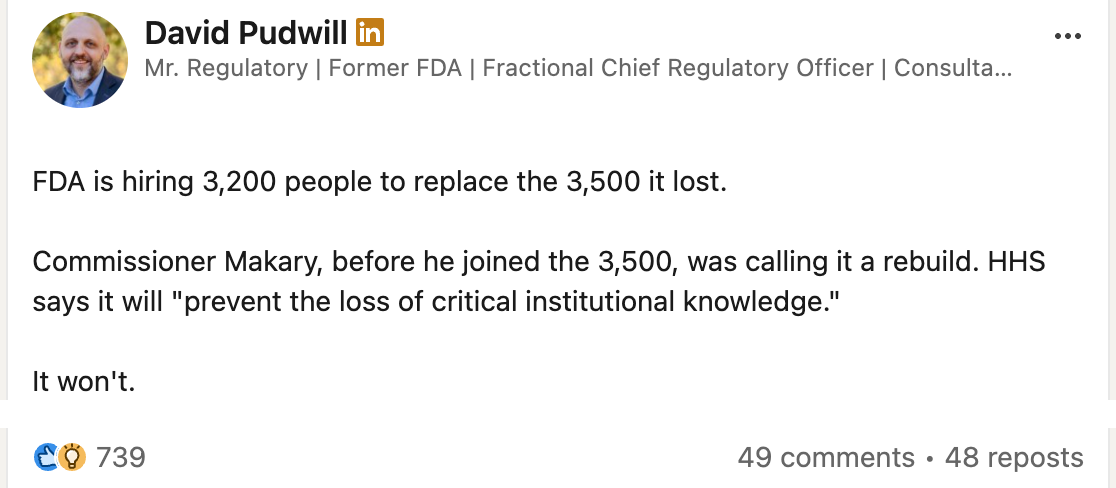
“FDA reviewers don’t know what your device does.”
49,253impressions · 55 comments · 28 reposts
“I told a founder last week: ‘I’m not going to review your FDA submission.’”
48,054impressions · 24 comments
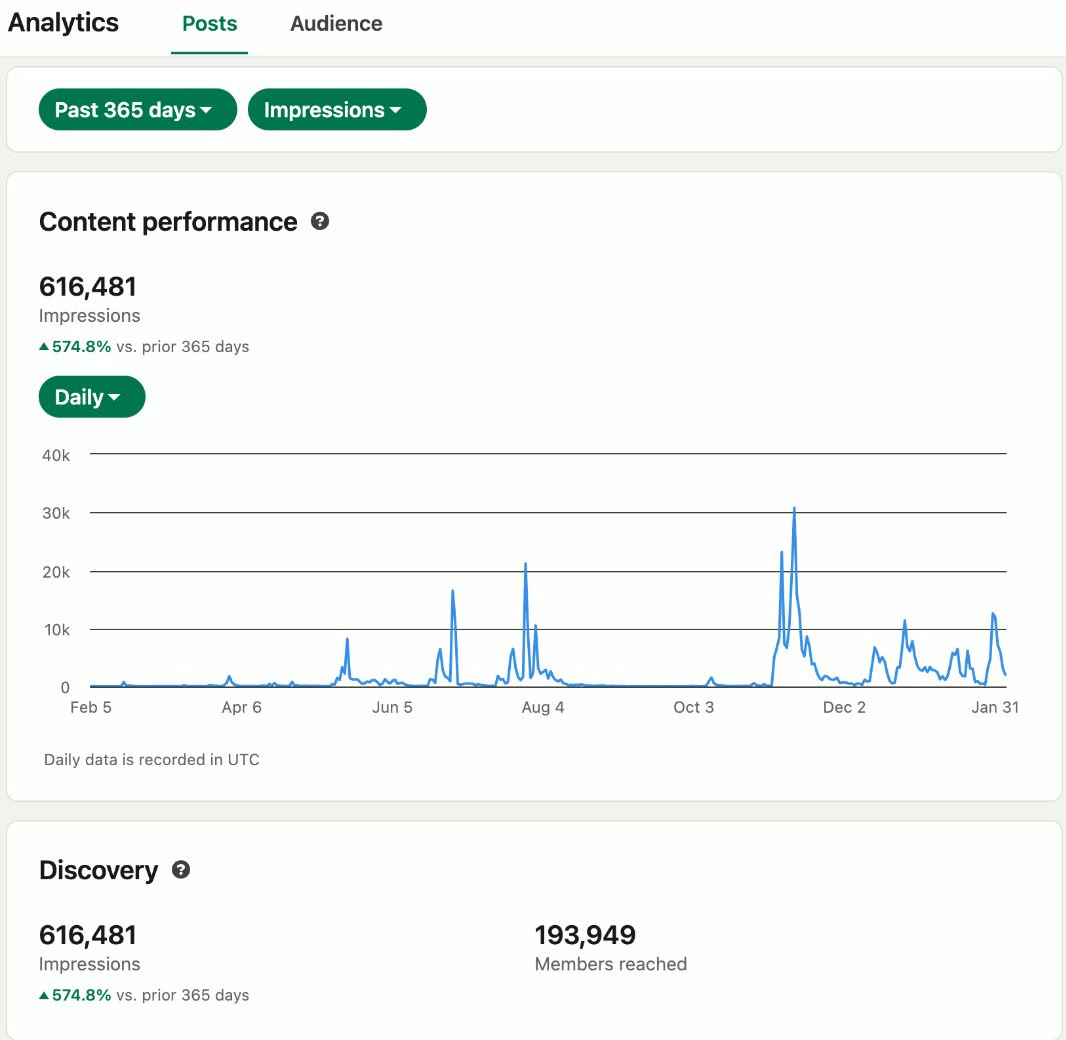
616,481
Impressions across the full year, up 575% on the year before, reaching 193,949 unique members.
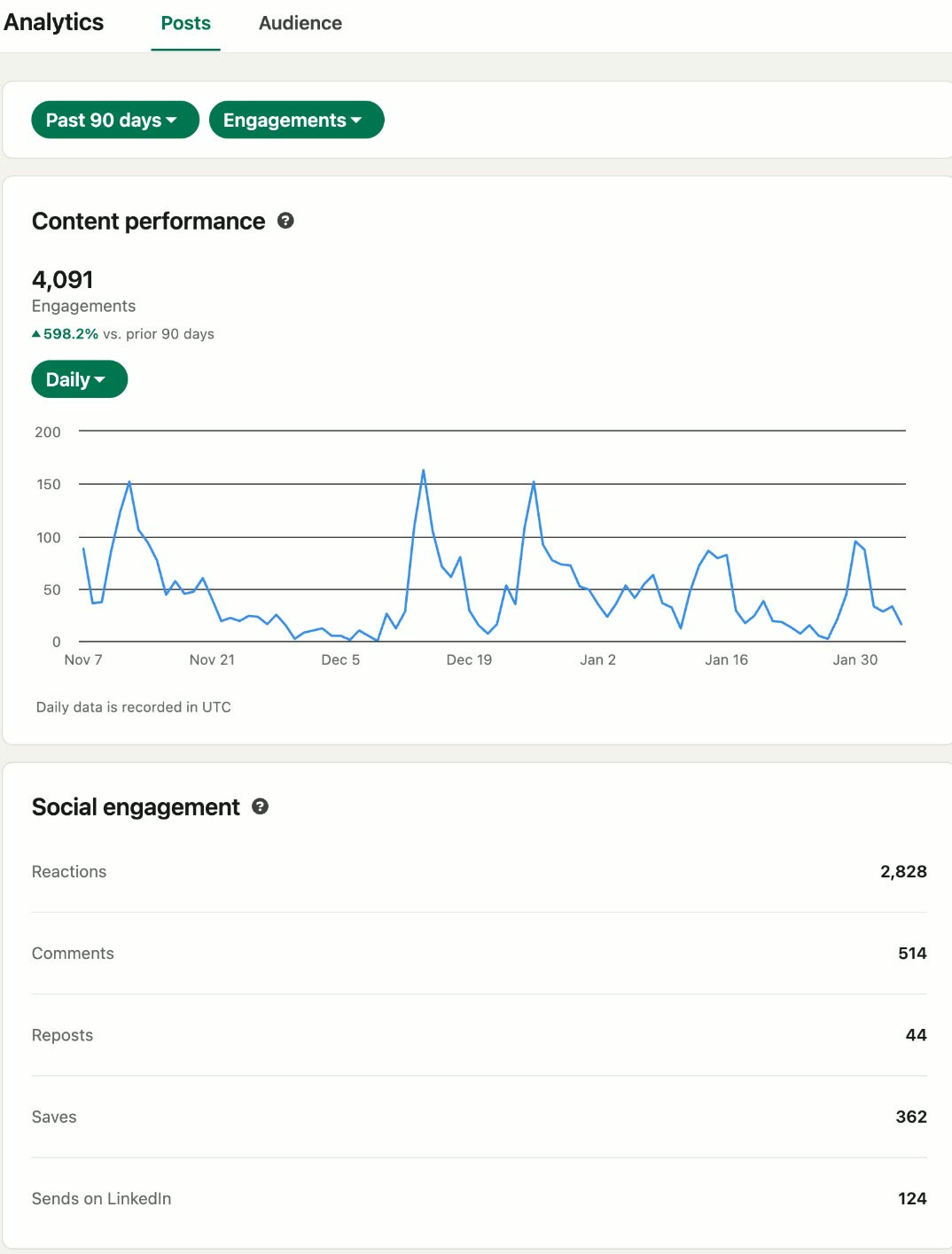
The posts that performed best shared one pattern: a counterintuitive statement rooted in real regulatory experience, then genuinely useful advice. His most-engaged post in those 90 days opened with “FDA reviewers don’t know what your device does”: 731 engagements and 49,253 impressions. The strongest posts regularly reached 40,000 to 50,000.
Book a call.
If you’re the specialist in your field and referrals are still your only pipeline, this is the same system: one interview a month, three posts a week in your voice, infographics in your brand. Seven clients at a time, from $4,500/month.